Pусский

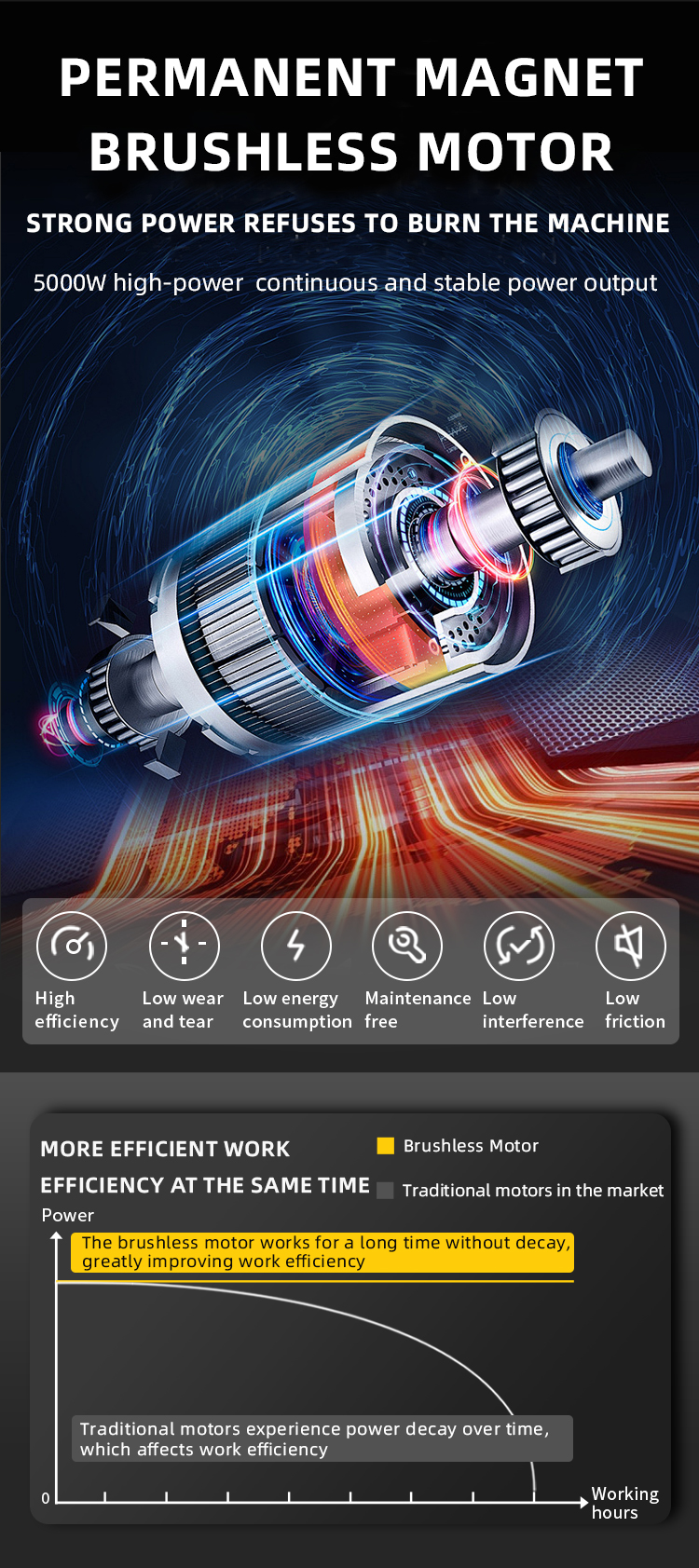
Understanding Brushless DC Motors (BLDC)
Overview:
Brushless DC motors (BLDC) are a type of synchronous motor powered by direct current (DC) electricity via an inverter or switching power supply which produces an AC electric signal to drive the motor. The basic structure of BLDC motors consists of a stator with windings and a rotor with permanent magnets. Unlike traditional brushed motors, BLDC motors use electronic commutation instead of mechanical brushes.
Key Components
Stator:Contains windings similar to those in three-phase induction motors.
Typically configured in a star (Y) connection.
Provides the magnetic field which interacts with the rotor.
Rotor:Embedded with permanent magnets.
Moves due to the magnetic field generated by the stator.
The polarity of the rotor is detected using position sensors.
Position Sensors:Essential for detecting the rotor position to control the electronic commutation.
Types include magnetic sensors (e.g., Hall sensors), photoelectric sensors, and electromagnetic sensors.
Driver/Inverter:Composed of power electronics and integrated circuits.Receives various control signals to manage motor functions such as start, stop, and speed regulation.Converts DC input to a three-phase AC output to drive the motor.Controls the timing of the power transistors in the inverter bridge to create continuous torque.Provides protection and diagnostic displays.
Advantages of BLDC Motors
1.High Efficiency:
Due to the lack of brushes, there are fewer frictional losses and maintenance issues.Efficient at both high and low speeds.
High Reliability:
No brushes means no mechanical wear and tear, thus longer life spans and fewer failures.
2.Low Maintenance:
The primary wear components are the bearings, which require minimal maintenance compared to brushed motors.
3.Better Speed-Torque Characteristics:
Capable of maintaining consistent torque over a wide range of speeds.Suitable for applications requiring precise control.
4.Low Noise and Smooth Operation:
The absence of brushes reduces noise and electromagnetic interference.Smooth operation is crucial for applications such as precision instruments and medical devices.
Applications
BLDC motors are widely used in applications requiring precise control, high efficiency, and reliability, including:
1.Aerospace models
2.Medical devices
3.Household appliances
4.Electric vehicles
5.Automated office equipment
Comparison with Brushed Motors
Brushed Motors:
Use mechanical brushes for commutation.Have higher friction and wear, leading to more maintenance.
Lower efficiency and shorter lifespan.
Brushless Motors:
Use electronic commutation, which reduces maintenance and increases reliability.Higher efficiency and longer lifespan.Require complex electronic controllers, which increase initial cost but are cost-effective in the long run due to lower maintenance needs.
Structure and Operation:
The BLDC motor's operation relies on the electronic controller, which:Receives DC input and converts it to three-phase AC.Uses feedback from position sensors to adjust the AC waveform to ensure optimal performance.Adjusts speed and torque according to control signals, providing precise motor control.
Sensor Types in BLDC Motors
Magnetic Sensors:
Detect rotor position based on changes in the magnetic field.
Commonly use Hall effect sensors or magnetic diodes.
Photoelectric Sensors:
Use light and a photodetector to sense rotor position.
Typically involve a light source and a shading mechanism attached to the rotor.
Electromagnetic Sensors:
Detect changes in inductance or coupling caused by rotor position changes.
Include components like proximity switches or LC resonant circuits.
Conclusion
BLDC motors offer superior performance and reliability compared to traditional brushed motors, making them ideal for applications demanding high efficiency and precise control. Despite their higher initial cost due to the need for sophisticated electronic controllers, their advantages in maintenance, lifespan, and operational characteristics make them a preferred choice in many high-end and precision applications.
So our company is well aware of the advantages of brushless motors in terms of maintenance, service life, and operational characteristics. We applied brushless motors to all of our products during product development and production, starting with the use of brushless motors on air compressors and cutting machines. Until now, we have also invested in the research and development of our new categories of brushless ring saws AC8400 and brushless chain saws AC839-350/480. We will introduce our new products, brushless ring saws and brushless chain saws, in the next chapter